
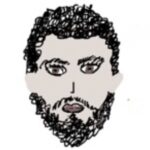
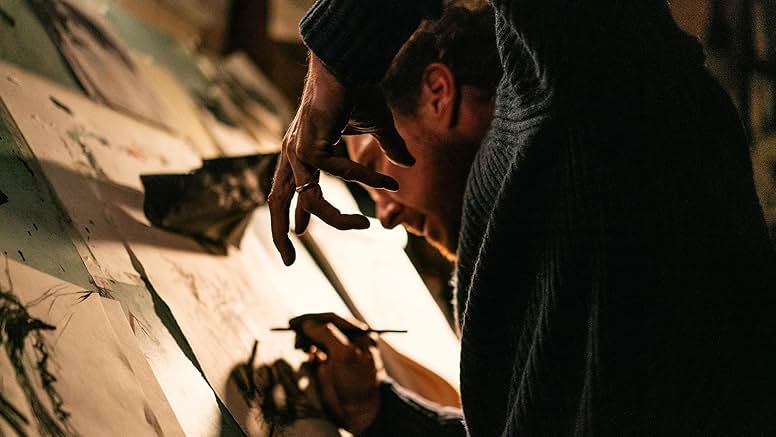
The Thing with Feathers is a psychological drama about grief and the strange ways it manifests when loss is too heavy to process. The film follows a father raising his two young sons after a tragic death, while dealing with an unexpected and unsettling presence that enters their home. Whether this presence is real or symbolic is left deliberately unclear, turning grief itself into something physical and intrusive.
The film moves slowly and leans heavily into mood and atmosphere. It is less interested in plot than in emotional states. Silence, darkness, and repetition dominate the storytelling, mirroring the numbness and confusion that follow loss. At times, the film feels abstract and distant, asking the viewer to sit with discomfort rather than offering explanation or release.
Benedict Cumberbatch gives a committed performance as the grieving father. He plays the role with visible exhaustion and inner collapse, using restraint rather than theatrical emotion. His performance is strong and serious, even when the film around him struggles to fully support it.
The film is directed by Dylan Southern, who approaches the material with ambition and visual control. The direction is confident in tone, but the symbolism often feels heavy handed. The metaphor of grief becomes so literal that it starts to lose emotional subtlety, making the film feel more strained than profound.
Critics were divided on the film. Many praised Cumberbatch’s performance and the bold attempt to visualize grief. Others felt the film was slow, overly symbolic, and emotionally distant. For me, The Thing with Feathers has moments of power, but it never fully connected. It wants to say something deep about loss, but it ends up feeling more cold and constructed than truly moving.