

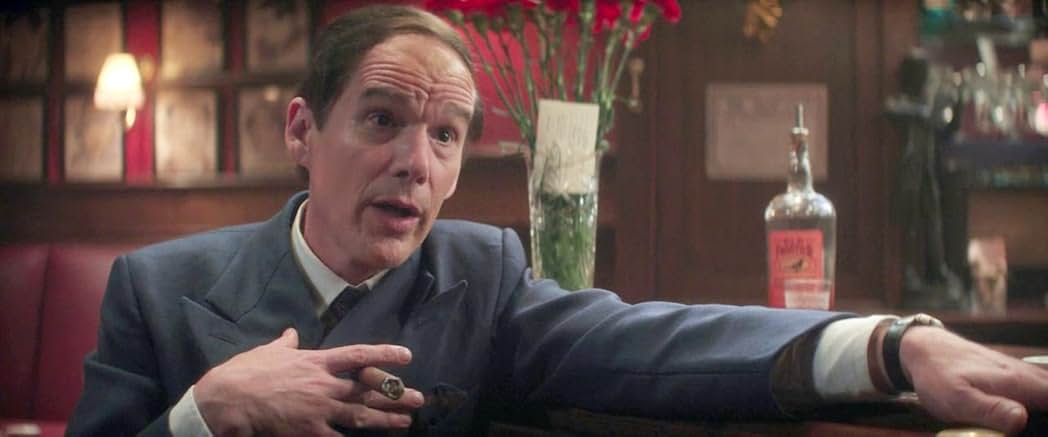
Blue Moon is a character driven drama that takes place mostly in quiet spaces. Bars, late conversations, half-finished drinks, and people talking more than they should. The story follows a group of characters circling each other through loneliness, ego, regret, and the need to be seen. It is not plot heavy. It is built on mood, dialogue, and the slow exposure of character flaws.
The film is very talky, and that is both its strength and its weakness. When the conversations hit, they feel sharp and honest. When they do not, the film can feel self-aware and indulgent. It is a film that trusts language and performance more than structure. You either settle into its rhythm, or you drift away from it.
Ethan Hawke is excellent and clearly enjoying himself. He delivers some of the film’s most memorable moments, including the line about sequels and prequels being made for “the shmucks in the dark,” which feels very on brand for both the character and the film’s cynical tone. Margaret Qualley brings charm and emotional sharpness, and Andrew Scott deserves real praise as well. His work here is quieter than Ethan Hawke’s, but just as precise. Scott has an incredible ability to communicate inner tension with very little. A look, a pause, a shift in tone. Nothing is pushed. Nothing is performed for effect. He listens as much as he speaks, and that gives the scenes weight. Next to Hawke’s explosive transformation, Scott provides balance and emotional credibility. Together, they elevate the film far beyond the page. The cast is strong across the board and keeps the film alive even when it drifts.
The film is directed by Richard Linklater, and his style is unmistakable. Long conversations, moral ambiguity, and characters thinking out loud about life, art, and failure. He is not interested in pleasing everyone, and that shows. The film feels loose, sometimes too loose, but always intentional.