

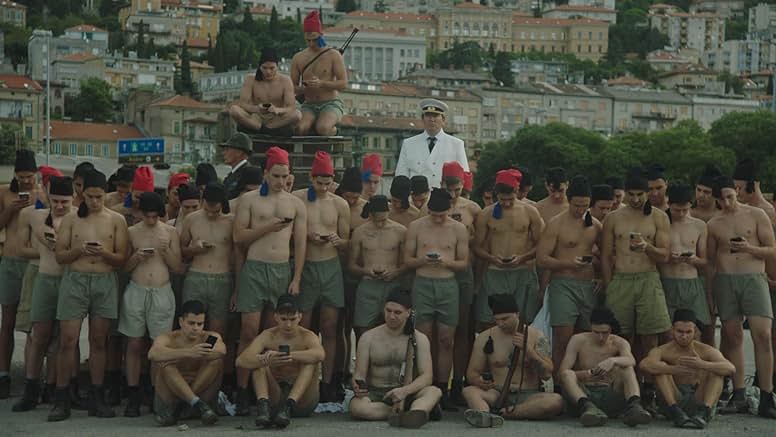
From the beginning, Fiume o morte! feels like something unique. It doesn’t tell its story in a simple or traditional way. Instead, director & writer Igor Bezinović mixes documentary style with creative acting and art. The film talks about the 1919 occupation of the city of Rijeka, which Italians called Fiume, by the famous poet and soldier Gabriele D’Annunzio. Rather than showing this history through experts or narration, the director lets the people of Rijeka today recreate and reflect on it. It feels both historical and modern (also hilarious at times) at once, like the city is remembering its past out loud.
The mix of styles makes the film lively and full of personality. Real locals play roles from the old days, often in modern clothes or using modern things, which gives the story a strange and funny energy. One scene shows a parade with a modern car standing in for a military convoy, showing how absurd and theatrical D’Annunzio’s movement was. The humor is subtle but clear, and it helps you see the story not just as history, but as a performance, the kind that still happens in politics today. This idea, that history repeats itself as a kind of show, gives the film a clever and modern touch.
The locals are not trained actors, yet they bring honesty and charm to their parts. You can feel that they care about their city and its strange history. Bezinović also uses long, quiet shots that make you notice faces, small gestures, and the background of Rijeka — its sea, its streets, its ruins. These moments slow down the film, but they also give it a poetic feeling. The city becomes the main character, breathing through every frame.
However, this style may not work for everyone. The film doesn’t have a clear storyline or emotional center. Because it mixes interviews, performances, and historical material, sometimes it feels confusing or distant. Some viewers could find the slow rhythm tiring, especially when scenes stretch longer than expected.
Even with its slow pace, Fiume o morte! has powerful ideas. It talks about how people build myths from history and how nations use stories to feel proud or special. It also shows how dangerous that pride can become. D’Annunzio’s “performance” in 1919 was both artistic and political, something between theatre and dictatorship. Bezinović uses that story to remind us how easily people can be led by emotion, beauty, and power. It’s a warning told through art, not anger.
In the end, Fiume o morte! is not a simple film to enjoy, but it’s one that stays in your mind. It’s beautiful, strange, and very thoughtful. It asks you to look at history differently, to see it not just as a list of facts but as something alive that still speaks to us. If you like slow, smart, experimental cinema, this film will reward your patience. If you prefer fast stories with clear plots, it might feel too quiet. But for those who love cinema that dares to mix past and present, imagination and truth, Fiume o morte! is a rich and original experience.