

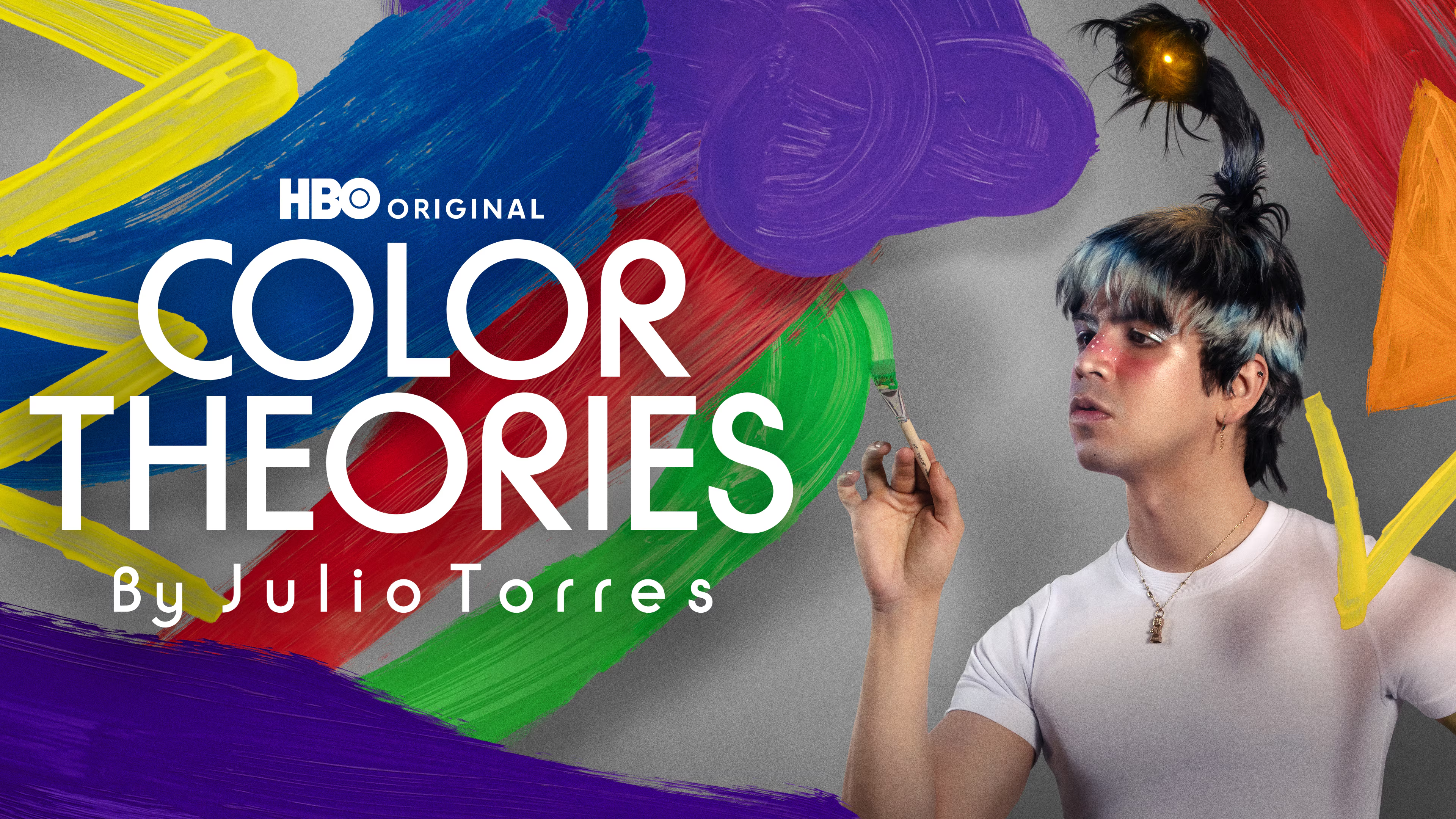
Color Theories
Stand-up, dream logic, surreal design, and a small robot named Bibo. Not a comedy special. Something better.
This Is Not Stand-Up. It Is Something Better.
You cannot quite call what Julio Torres does stand-up comedy. The stool is gone. The microphone stand is gone. In their place: a fairytale set designed to look like a large open book, Torres emerging from its pages through a hole cut in the shape of his own silhouette, markers in hand, ready to draw on the oversized paper walls around him. And a small animatronic robot named Bibo — carried over from his Peabody Award-winning HBO series Fantasmas — who sits to the side, offers counterpoints, and at one point argues Torres back from a conclusion, which turns out to be the show's most structurally elegant move.
Color Theories is the second HBO comedy special from Julio Torres, a follow-up to My Favorite Shapes (2019), and it is the fullest available expression of what he has been building across Problemista, Los Espookys, and Fantasmas: a complete world with its own logic, its own aesthetic, and its own specific way of explaining the world that is not like anyone else's.
"I don't think anyone has mastered the 'so specific and personal that it becomes universal' thing like Julio Torres."Letterboxd
Every Color Has a Personality. Every Personality Has a Color.
Torres explores each through hilarious observations from his life and culture at large. Each color becomes a portal into a specific emotional register. His method: take something that everyone has observed and never named, and give it the most accurate possible name. The humor comes from the recognition. The surprise comes from how precise the naming turns out to be.
You think: I have never thought about that before. Then you think: I have been thinking about it my whole life without the words for it. That is the specific Torres gift. That is what makes this more than comedy.
A Show About Color That Is Itself Overwhelmingly Colorful
The fairytale set looks like a large open book, Torres emerging through a hole cut in the shape of his own silhouette. He uses colored markers to draw on the oversized paper walls around him, visualizing his ideas as he speaks them into existence. It is performance art, comedy, and a children's book illustration all happening at once.
Bibo — introduced as emphatically not an AI ("more like a Pinocchio or Frankenstein situation") — functions as the show's comic counterweight. Torres reaches a conclusion; Bibo questions it. The climax, in which Bibo challenges the very concept of Color Theories itself, is the kind of structural move that most stand-up specials would never attempt and that Torres executes with total confidence.
Deeply Personal. Universally Accessible.
Torres knows what to keep from stand-up and what to toss out. This is not difficult work. It is not exclusive. It is not a performance art piece that requires a specific cultural background to decode. His specific genius is that he makes the deeply personal universally accessible — the surreal, warm, witty, politically intelligent world he has been building since My Favorite Shapes now has its most complete and confident expression.
He is interested in the big picture: how emotions define us, how the systems we live inside shape what we are permitted to feel, how the most mundane observations about color contain entire arguments about identity and power. He reaches these conclusions via the most surprising available routes. When he arrives, the conclusion feels not just correct but inevitable.
The specific comic structure Torres employs: surprising but inevitable. You think it is going in one direction, then it goes somewhere else that you would never guess, but at the same time feels completely right. You cannot anticipate it. In retrospect, it could not have been any other way.
The Apparent Hesitation That Is Actually the Point
Color Theories tilts into seriousness near its end. Torres's navy blue section builds sharp political edge — his disdain for what navy blue represents, institutional conformity, the demand that you flatten yourself to fit systems not built for you — and then Bibo steps in and complicates the conclusion.
Some critics read this as the show tempering its own argument. It is the opposite. The moment Bibo pushes back is the moment Torres trusts the audience enough to hold the contradiction rather than resolve it. A lesser show gives you the clean takedown. Torres gives you something more honest: the recognition that naming a system's cruelty does not automatically make you immune to it, and that the most interesting position is not certainty but the space just after it.
The ending does not retreat. It deepens.
Color Theories is the rare comedy special that is also a genuine aesthetic experience — something that changes, slightly, how you see the world after watching it. The navy blue joke will stay with you. The red will surprise you. The ending will make you think about Bibo for days. And somewhere in the middle, without noticing when it happened, you will have learned something about yourself from a man explaining markers on oversized paper in a room that looks like a book.
★★★★★